
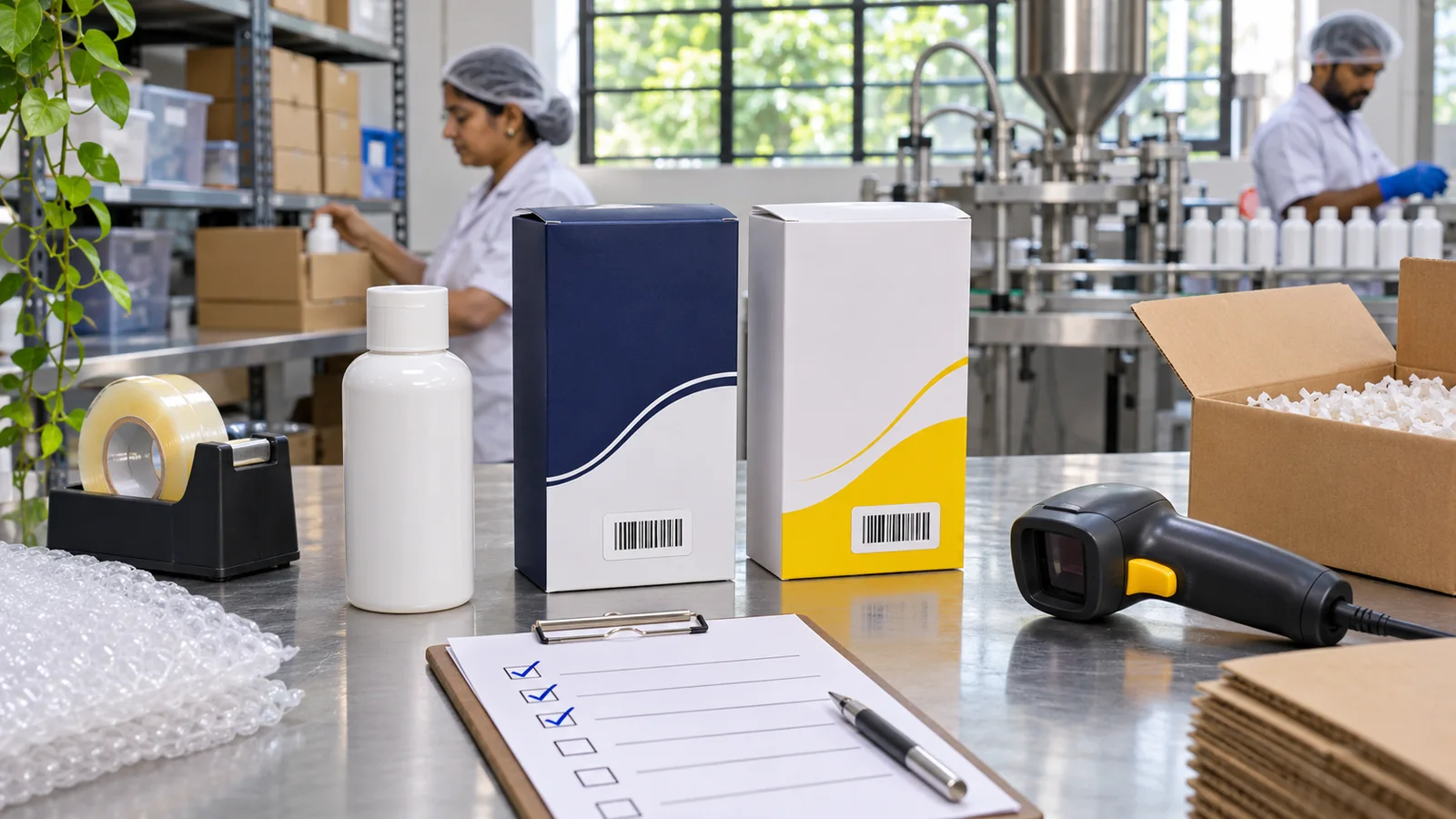
Your manufacturer sends a sample carton with a barcode already printed on it. The product inside matches what you ordered, but your logo is going on the final pack. Can you keep the number from the sample?
For a private label product, the brand owner normally takes responsibility for assigning the product identifier, even when another company makes and packs the goods. The factory can print the approved symbol. Before you send artwork to print, confirm who controls the product record, whose identifier should appear on the pack and what your sales channel accepts.
Who is responsible when another company makes the product?
Start with the product the buyer sees. A factory might fill the same type of handwash into bottles for several clients. If those bottles are sold under different brands, a shop needs to tell them apart. Sharing the factory and formulation does not make them the same branded trade item.
The party that owns the specifications of the branded item normally handles identifier assignment. This could be a retailer selling its own range, a brand that contracts out production, or a manufacturer selling under its own name. Ask the brand and factory to agree the handover before anyone starts work on the label.
Three common arrangements and what to do
| Arrangement | Example | What to check |
|---|---|---|
| Reselling the factory’s existing branded item | You buy sealed bottles under the supplier’s brand and sell them unchanged. | Use the existing identifier for that exact item if it meets your channel’s requirements. Verify it with the supplier. |
| Selling under your own brand | The factory fills the bottles, but the product is sold with your own brand and approved label. | Agree the identifier for your branded retail item. Do not carry the number over from the supplier’s sample or a different brand. |
| Manufacturing for two brands | One factory supplies the same bottle size to a supermarket brand and an independent brand. | Keep separate approved product records and artwork for the two brands. Each brand should confirm its own assignment and channel requirements. |
If you are simply buying stock to resell, ask for a photo of the final retail pack and its identifier before requesting a new number. If you are launching your own label, ask the factory whether any sample graphics or numbers are placeholders. Settle that question while changing the artwork is still easy.
Build the product list before ordering barcodes
List the exact items customers can order. Suppose your own-brand handwash comes in a 250 ml pump bottle, a 500 ml pump bottle and a 500 ml refill pouch. Those are three distinct retail offers. If you order 1,000 identical units of each, plan identifiers for the three offers, not for the 3,000 units.
Give each line a clear description. “Lemon handwash, 500 ml, refill pouch” is harder to confuse with “Lemon handwash, 500 ml, pump bottle” than two spreadsheet rows that both say “Lemon 500”. Include the brand, size, format and internal SKU in your approved record.
A product identifier is the number. EAN-13 is a barcode format that represents a suitable 13-digit identifier. A barcode graphic supplied by the printer does not decide whose number belongs on the product. For the broader launch workflow, use the new product barcode checklist.
Give the factory one approved source of truth
Send one controlled sheet that ties each retail product to its assigned number and final artwork. List the file revision and name the person who can approve a replacement. If the factory copies a carton layout for a second size, the new layout must pull its number from that size’s record.
- Brand: Confirm the product list, accepted identifier route and approved artwork.
- Factory: Check the product, pack and artwork revision against the same list before printing or packing.
- Both: Scan a finished sample. Compare the digits read by the scanner with the approved record, then check what the intended store or inventory system displays.
Never approve a pack only because the scanner beeps. A sample can scan cleanly and still carry the wrong number. Where the buyer requires formal print-quality verification, ask for that separately from your routine scan check.
What happens when you switch manufacturers?
Review what changed in the actual trade item. If the branded product, specifications and declared pack contents are unchanged, moving production alone is not a reason to borrow the new factory’s number. Compare both packs and check the applicable assignment rules and buyer requirements before approving the transfer.
If the move also changes the formulation, net quantity or primary brand, review whether the revised item needs a new identifier. Give the incoming factory only the approved files and document which packaging revision goes with each item. For other changes, see when a product needs a new barcode.
Check buyer requirements before committing to a print run
Ask your retailer or marketplace which identifier and registration route it requires for your brand and category. Confirm those requirements before ordering barcodes or printing packs. If your intended channel accepts the route, explore YesBarcode’s EAN-13 packages, which include JPG and SVG artwork and an Excel number list. Share the approved files with your factory after matching every number to the right product.
Frequently asked questions
Can I use my manufacturer’s barcode on my private label?
Do not copy a number from the factory’s sample or another branded item. Confirm the appropriate identifier for the exact product sold under your brand and check buyer requirements.
Can the factory print barcodes for my brand?
Yes. The factory can apply the approved artwork. Agree who assigns the number and maintains the product record before production.
Can two private labels share a barcode if the product inside is identical?
Products sold under different primary brands need distinct identifiers. The buyer must be able to distinguish the branded offers.
Do I need a new barcode if I change factories?
A factory change alone does not necessarily change the trade item. Review the product specifications, brand, pack content and buyer requirements before reusing the existing number.
Do I need separate identifiers for my bottle and refill pouch?
Plan distinct identifiers when the bottle and refill pouch are separately ordered, stocked or sold as different retail offers.